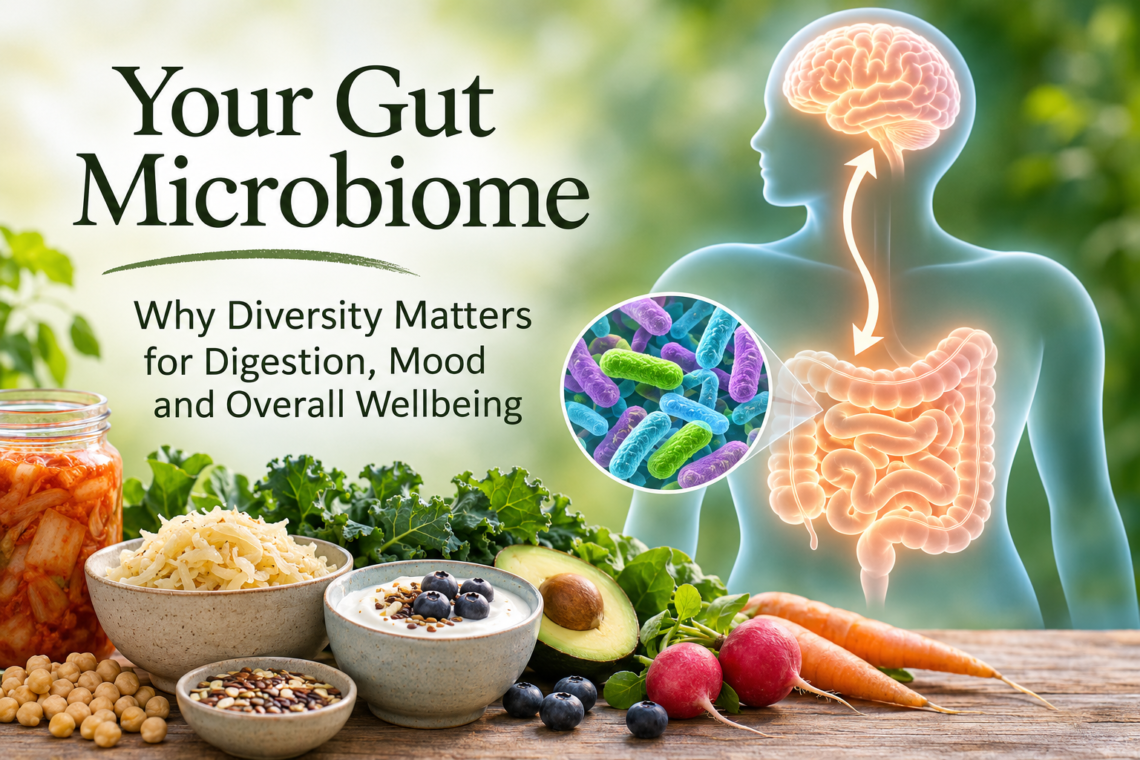
Your Gut Microbiome: Why Diversity Matters for Digestion, Mood and Overall Wellbeing
Have you ever said, “I’ve got a gut feeling about this”, “I’m gutted” or “I’ve got butterflies in my stomach”?
It’s interesting how our everyday language has recognised the connection between our gut and emotions for generations. Long before scientists began exploring the gut–brain connection, we were already describing our feelings through our digestive system.
Today, research is showing just how closely our gut health is connected to our physical and emotional wellbeing. And one of the most important things we’re learning is that when it comes to our gut microbiome, diversity really is key.
Why Is Microbiome Diversity So Important?
Our digestive system is home to trillions of microorganisms, including bacteria, yeasts, fungi and viruses. Together, these form what we call our gut microbiome.
There are thousands of different microbial species and an enormous variety of strains, each with their own roles. Some help break down the food we eat, others produce beneficial compounds, support our immune system or help maintain the protective lining of our intestines.
I often think of our microbiome like a garden. If you have a garden filled with a variety of plants, flowers and healthy soil, it’s generally going to be more resilient than one growing just a single type of plant. Our gut is much the same. We want a diverse community of beneficial microorganisms working together, rather than relying on just a handful of species.
But it’s not simply about having as many bacteria as possible. It’s about having the right balance of microorganisms for our individual digestive environment.
How Does Our Gut Microbiome Influence Our Mental Health?
This is an area of research I find particularly fascinating.
Our gut and brain are constantly communicating through what we call the gut–brain axis. This involves the vagus nerve, our immune system, nervous system and various chemical messengers.
Certain gut bacteria produce compounds that influence inflammation, nervous system activity and how our bodies respond to stress.
You may have heard that around 90% of the body’s serotonin is produced in the gut. Serotonin is a chemical messenger that helps regulate mood, sleep and feelings of wellbeing, which is why it’s often called our “feel-good chemical”. Interestingly, serotonin produced in the gut mainly helps regulate digestion and doesn’t travel directly into the brain.
Research has also found links between changes in the gut microbiome and conditions such as anxiety and depression.
Another interesting discovery is that family members living in the same household often share similar gut microbiomes. This is partly due to eating similar foods, sharing the same environment and having similar lifestyle habits. Anxiety and depression can also run in families, and researchers are investigating whether these shared microbial patterns may be one contributing factor, alongside genetics and other influences.
It certainly gives us another perspective on how our environment, digestive health and emotional wellbeing may be connected.
And of course, this communication works both ways. Think about how your digestion changes when you’re stressed. You might experience bloating, constipation, loose bowel movements or simply lose your appetite. That’s your gut–brain connection at work.
Beneficial Bacteria and Yeasts: What Do They Actually Do?
With thousands of different microorganisms living in our gut, it can be confusing knowing which ones are beneficial and what they actually do.
If you’re looking to give your digestive system a little helping hand, one probiotic I suggest considering is BePure Probiotic. It contains 19 listed types of beneficial bacteria and yeast, which have different potential roles in supporting digestive wellbeing.
Rather than going through every strain individually, I’ve grouped them into their main families to make it a little easier to understand.
Lactobacillus – Supporting Digestion and Gut Balance
Lactobacillus bacteria are commonly found in our digestive system and fermented foods. Many produce lactic acid, helping maintain an environment that supports beneficial microorganisms.
BePure contains Lactobacillus acidophilus, bulgaricus, casei, fermentum, gasseri, helveticus, paracasei, plantarum, reuteri, rhamnosus and salivarius.
Different strains within these species have been studied for supporting lactose digestion, bowel regularity, immune function and digestive comfort. Certain strains of Lactobacillus plantarum have also been researched for bloating and IBS symptoms, while particular strains of Lactobacillus helveticus have been investigated for their potential influence on stress and mood.
Bifidobacterium – Feeding the Gut and Supporting the Gut–Brain Connection
Bifidobacteria are another important group of beneficial bacteria, particularly when it comes to breaking down certain dietary fibres and producing compounds that support intestinal health.
BePure contains Bifidobacterium bifidum, breve, infantis, lactis and longum.
Certain strains of Bifidobacterium lactis have been studied for constipation and bowel regularity, while particular strains of Bifidobacterium infantis have been researched for IBS symptoms.
What I find especially interesting is Bifidobacterium longum, as specific strains are being investigated for their potential influence on stress responses and the gut–brain connection.
Other Beneficial Microorganisms
The formula also includes Streptococcus thermophilus, which helps with lactose digestion, and Saccharomyces boulardii, a beneficial yeast with evidence for helping prevent certain types of diarrhoea, particularly antibiotic-associated diarrhoea.
Another interesting addition is Bacillus coagulans MTCC 5856, a specific probiotic strain that has been studied for its potential to help with bloating, abdominal discomfort and IBS symptoms.
One thing I always like to point out is that probiotic benefits are often strain-specific. Just because one strain has been clinically researched doesn’t necessarily mean every strain of that bacterial species will provide the same benefits.
Study on ‘The Role of Gut Microbiota in Anxiety, Depression, and Other Mental Disorders as Well as the Protective Effects of Dietary Components’ https://pmc.ncbi.nlm.nih.gov/articles/PMC10384867/
How Can We Naturally Encourage a More Diverse Microbiome?
One of the simplest things we can do is eat a greater variety of plant foods.
I’m not talking about completely changing your diet overnight. Sometimes it’s just about looking at what you’re already eating and adding a little more variety.
Perhaps you always buy the same vegetables each week or have the same breakfast every morning. Try changing things around. Add different herbs to your cooking, sprinkle seeds over your breakfast or introduce a vegetable you wouldn’t normally buy.
A useful goal is to work towards 30 different plant foods each week, including vegetables, fruits, legumes, whole grains, nuts, seeds, herbs and spices.
Prebiotic foods are particularly helpful because they provide nourishment for certain beneficial bacteria. These include garlic, onions, leeks, asparagus, oats and lentils.
When our gut bacteria ferment these fibres, they produce short-chain fatty acids, including butyrate, which helps nourish the cells lining our colon and supports intestinal health.
Fermented foods such as sauerkraut, kimchi, kefir and live-culture yoghurt may also be beneficial. Traditionally fermented, unpasteurised foods can contain live microorganisms, although the amounts and types vary.
However, something I always emphasise is that not every food or probiotic is suitable for everyone. If you’re experiencing significant bloating, IBS or other digestive issues, introducing large amounts of fibre or fermented foods may actually make you feel worse. This is where individual nutritional advice becomes important.
And let’s not forget our nervous system. Stress, poor sleep and our emotional state can all influence digestion. Supporting gut health isn’t just about what we eat, but also how we live.
Supporting the Gut–Brain Connection With GutBrainA™
As a Clinical Nutritionist and Advanced Clinical Hypnotherapist, I work with both nutrition and the gut–brain connection.
My GutBrainA™ programme uses Gut-Directed Hypnotherapy, a clinically researched approach for IBS, to help calm the nervous system and support gut–brain communication.
It’s a self-directed 8-week programme that takes just 30 minutes a day, from the comfort of your own home. Membership is NZ$20 per month, and 1:1 sessions are also available.
You can find out more at www.gutbraina.com.
A Final Thought
Our gut microbiome is an incredibly complex ecosystem, and we’re still learning just how much influence it has on our health.
What I find so fascinating is that our digestive system doesn’t work in isolation. It’s constantly communicating with our brain, immune system and the rest of our body.
While probiotic supplements can have their place, we shouldn’t overlook the importance of feeding the beneficial microorganisms already living within us.
So here’s my little challenge to you this week. Try adding five different plant foods to your meals that you wouldn’t normally eat. It doesn’t have to be complicated, and you might discover some new favourites along the way.
Remember, when it comes to our gut microbiome, diversity is key!
Namaste
Clare
Clinical Nutritionist, Advanced Clinical Hypnotherapist, Gut Directed Hypnotherapist
www.gutbraina.com
www.intuitivenutrition.co.nz
Disclaimer: If you are experiencing digestive issues, I recommend seeking professional advice from a qualified nutritionist, naturopath or medical professional before making dietary changes or taking probiotic supplements. Certain foods and probiotics may not be suitable for your individual digestive needs at this time, and a personalised approach is always best.